
GS1 Sunrise 2027 Guide:
Preparing Product Packaging and Supply Chains for 2D Migration
GS1 Sunrise 2027 is the global retail move toward 2D barcodes that can scan at checkout and carry richer product data. It does not mean UPC/EAN barcodes will disappear overnight. Brands should prepare their packaging, labels, scanners and data systems for the transition.
What Is GS1 Sunrise 2027?

Source: GS1 Sunrise 2027 Official Page
GS1 Sunrise 2027 is an industry initiative encouraging retailers, brand owners, manufacturers and solution providers to get ready for 2D barcodes at retail point-of-sale by the end of 2027.
The initiative does not mean every product must remove its UPC or EAN barcode in 2027. Its main focus is POS readiness. Retailers need barcode scanners and systems that can read and process GS1 2D barcodes. Brands and manufacturers need to review how their product data, packaging, labels and printing workflows will support that change.
A traditional UPC or EAN barcode usually carries a GTIN, or Global Trade Item Number, for product identification and price lookup. Under GS1 Sunrise 2027, the industry is preparing for GS1 QR codes or DataMatrix codes that can support the GTIN and, depending on the format, GS1 AI (Application Identifier) data or digital access to online product information.
In simple terms, Sunrise 2027 asks one practical question:
"Can your product barcode do more than identify the item at checkout?"
What Is the GS1 Sunrise 2027 Deadline?
The GS1 Sunrise 2027 deadline is best understood as an industry preparation milestone rather than a sudden mandate. By the end of 2027, the primary goal is retail POS readiness—meaning retailers should have the scanning hardware and software capable of processing GS1 2D barcodes at checkout.
For brands and manufacturers, this deadline serves as a target to align their systems. Preparation involves:
- ✓ Verifying if your internal systems (ERP, WMS) can generate and manage 2D barcode data.
- ✓ Testing if your production lines can print high-quality, readable 2D codes.
- ✓ Coordinating with retail partners to understand their specific timeline for accepting 2D barcodes.
Why Is the Industry Moving from 1D Barcodes to 2D Barcodes?
The move from 1D to 2D barcodes is driven by a simple limitation: traditional retail barcodes can identify a product, but they cannot easily support today’s demand for richer product data.
Consumers want more information before and after purchase. They may look for ingredients, allergens, instructions, recycling guidance, origin details, certifications or brand information.
GS1 US reported that 77% of consumers say product information is important when making a purchase, and 79% are more likely to buy a product when it includes a smartphone-scannable QR code with additional product information.

Retailers also need better data at store level. A GS1 2D barcode can help support workflows such as:
- product traceability & recalls
- expiry date management
- markdowns for near-expiry items
- inventory checks
- product authentication
- shelf and stock operations
For manufacturers and brand owners, 2D barcodes can connect packaging, production data, traceability records and digital product content. This turns the barcode from a simple checkout symbol into a bridge between the physical product, retail systems and online information.
What Types of 2D Barcodes Are Related to GS1 Sunrise 2027?
GS1 Sunrise 2027 is not about placing any QR code on a package. The code must follow GS1 standards if it is expected to work across retail and supply chain systems.
GS1’s retail POS guideline lists three POS 2D barcode options: GS1 DataMatrix, QR Code with GS1 Digital Link, and Data Matrix with GS1 Digital Link.
GS1 DataMatrix encodes structured GS1 data, such as GTIN, batch or lot number, expiration date, and serial number. It is often suitable for small labels, regulated goods, healthcare products, components, and traceability-focused supply chain applications.
GS1 Digital Link is a standard that connects a product’s GS1 identity to online information via a web link. QR Code or Data Matrix with GS1 Digital Link carries a GS1-structured web address, allowing both system-level identification and access to digital content. Below is an example.

To learn more, see our guide: What Is GS1 Digital Link and How to Implement It in Product Packaging
For consumer-facing packaging, QR Code with GS1 Digital Link is often preferred, as shoppers can scan it with a smartphone to access product details, usage instructions, traceability information, certifications, recycling guidance, or promotional content. This format effectively combines standardized product identification with consumer interaction.
Does Sunrise 2027 Mean UPC and EAN Barcodes Will Disappear?
No. Sunrise 2027 does not mean UPC and EAN barcodes will disappear overnight.
During the transition, many products may carry both traditional 1D barcodes and GS1-powered 2D barcodes. This helps products remain scannable in stores that are not fully ready for 2D POS processing.
GS1’s implementation guidance says linear barcodes such as EAN/UPC and GS1 DataBar will coexist with 2D barcodes for as long as there are uses for them.
This is important for packaging teams. A product may need space for both codes:
- The 1D barcode supports current POS systems.
- The 2D barcode prepares the product for richer data use.
- The package layout must avoid scanning confusion.
- The 2D code must follow GS1 rules, not only marketing needs.
Which Industries Will Be Affected by GS1 Sunrise 2027?

GS1 Sunrise 2027 can affect any business that sells, packs, labels, distributes or scans retail products. Food and beverage, retail, cosmetics, apparel, healthcare, packaging and logistics are among the most visible sectors.
| Industry | How Sunrise 2027 May Affect It |
|---|---|
| Food and beverage | Expiry date, batch tracking, recall management, consumer information |
| Retail and supermarkets | POS scanning, markdowns, inventory, product data access |
| Cosmetics and personal care | Ingredient information, batch traceability, anti-counterfeit, brand engagement |
| Warehousing and logistics | Carton labels, shipment data, stock accuracy, scanning workflows |
| Healthcare and medical supplies | DataMatrix, traceability, regulated identification workflows |
A real case is Tesco. In April 2026, Tesco became the first UK supermarket to transition an entire product range to QR codes and Data Matrix codes powered by GS1, replacing traditional linear barcodes across its own-label core sausage range. GS1 UK described the move as a shift from pilots into everyday retail use at scale.
What Should Businesses Prepare Before 2027?
Transitioning to 2D barcodes involves more than just a packaging redesign. To ensure full GS1 Sunrise 2027 compliance, businesses should start with a practical audit of their hardware, software, and printing workflows:
1. Product scope
Identify which products are sold through retail POS and may need GS1 2D barcodes.
2. Barcode format
Decide whether the product needs QR Code with GS1 Digital Link, GS1 DataMatrix or another approved format.
3. Data requirement
Confirm whether the code only needs a GTIN or whether it should include batch, expiry date, serial number or a digital link.
4. Printing method
Choose direct coding or barcode labels based on packaging requirements, line setup, and production workflow.
5. Print quality
Test size, contrast, quiet zone, material, print resolution and surface condition.
6. Scanning ability
Check whether POS scanners, handheld scanners and warehouse devices can read the required 2D codes.
7. System readiness
Confirm that POS, WMS, ERP, MES or quality systems can process the scanned data.
8. Transition planning
Keep UPC/EAN compatibility where required during the transition period.
The key point is simple: printing a 2D code is only one step. The code must be readable, standards-based and usable by the business system behind the scanner.
Hanin Coding and Labeling Solutions for GS1 2D Barcode Transition
As businesses prepare for GS1 Sunrise 2027, barcode readiness depends on both data accuracy and physical execution. The code on product packaging also needs to be printed clearly, placed accurately, and scanned reliably in production, logistics, and retail environments.
Hanin provides hardware solutions for companies that need to print or apply GS1 2D codes on packaging, labels, cartons, and logistics units. These solutions support real-time variable data printing, high-quality QR Code and DataMatrix output, and automated labeling workflows.
TTO Coding Solutions


Hanin coding and marking systems enable real-time variable data printing on flexible packaging, films, bags, labels, and other packaging materials. They can print batch codes, lot numbers, production dates, expiration dates, GS1 QR Codes, and DataMatrix codes with high print quality.
Our thermal transfer overprinters can be integrated with horizontal flow wrappers, vertical form-fill-seal lines, pouch packaging machines, and automated packaging lines. They help food, beverage, personal care, pharmaceutical, and daily chemical manufacturers add dynamic product data directly on the packaging line.
Recommended Models:
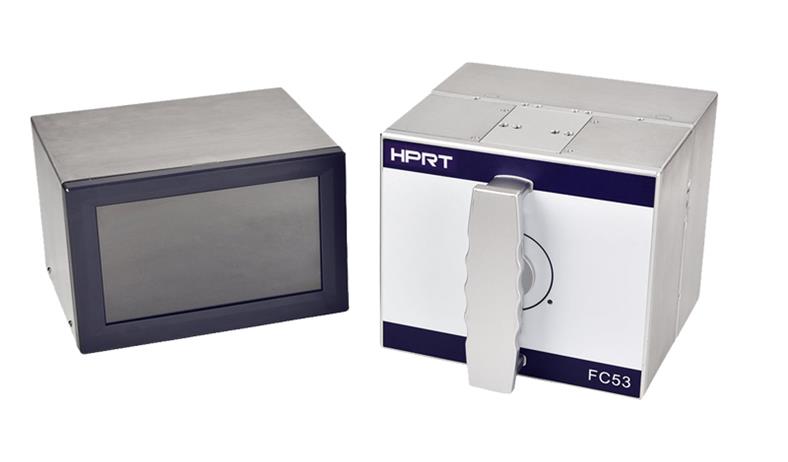
FC53 Thermal Transfer Overprinter
The HPRT FC53 series is a robust all-metal structured thermal transfer overprinter line designed for continuous or intermittent production lines. Perfect for coding on film, pouches and other flexible packaging materials.
- • Resolution: 300 dpi
- • speed: 40-600mm/s
- • Max. printing width: 53 mm
- • Ribbon capacity: 1100 meters
- • Ribbon types: Wax, Wax/resin, Resin
- • Software: HPRT Format Designer
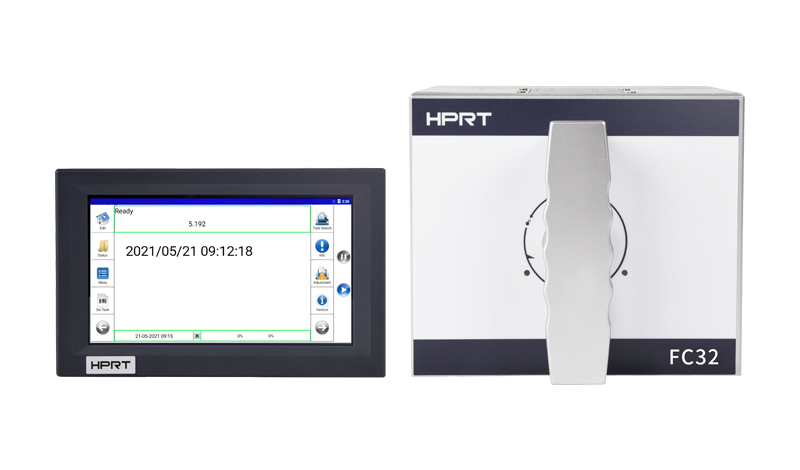
FC32 Thermal Transfer Overprinter
The HPRT FC32 series ofTTO printers shares key features with the Fc53 series but has a narrower 32 mm printing width, ideal for smaller print areas.
- • Resolution: 300 dpi
- • speed: 40-600mm/s
- • Max. printing width: 32 mm
- • Ribbon capacity: 1100 meters
- • Ribbon types: Wax, Wax/resin, Resin
- • Software: HPRT Format Designer
Barcode Label Printers
Hanin barcode label printers deliver high-precision variable data and GS1 2D code printing for product labels, packaging labels, carton labels, warehouse labels, and traceability labels.
With strong durability, easy integration, and broad compatibility, these printers help create clear product information and scannable labels for fresh food labeling, cold chain logistics, warehouse receiving, retail distribution, inventory management, and product traceability.

Need support for GS1 2D code printing or labeling?
Contact Hanin to discuss your packaging material, barcode data, production speed, and application scenario.
Contact UsFAQs About GS1 Sunrise 2027
What Is GS1 Sunrise 2027?
GS1 Sunrise 2027 is an industry initiative to prepare retail POS systems and supply chain stakeholders for GS1-powered 2D barcodes by the end of 2027. These barcodes can support product identification and may also carry richer data or connect to digital product information.
Is GS1 Sunrise 2027 Compliance Mandatory?
It is best understood as an industry transition target, not a single global law that forces every company to remove UPC/EAN barcodes in 2027. Brand owners should still follow retailer requirements, regional rules and GS1 guidance.
Will UPC and EAN Barcodes Be Replaced?
Not immediately. UPC and EAN barcodes will continue to coexist with 2D barcodes during the transition. Many products may need both a traditional retail barcode and a GS1 2D barcode until POS systems are consistently ready.
Do Businesses Need New Scanners for 2D Barcodes?
Not always. Some current scanners may already support 2D codes. The key is to confirm that the scanner can read the required code type and that the connected system can process the data correctly.
Can 2D Barcodes Include Expiry Dates and Batch Numbers?
Yes. GS1-powered 2D barcodes can include data such as batch number, lot number, expiry date and serial number when the correct GS1 data structure is used. The required data depends on the product category and business process.
Should Manufacturers Print Both 1D and 2D Barcodes During the Transition?
In many cases, yes. Keeping the existing UPC/EAN barcode helps maintain checkout compatibility, while adding a GS1 2D barcode prepares the product for richer data capture.